Friday, May 20, 2011

Giving up your books is not easy, but it can be done

Those of us who are regular readers of books have a tendency to collect books. We love books. We'll have them wrapping around our walls, staring out at us from open shelves. We'll have boxes of them tucked away in attics and beneath desks. We'll have books stacked on top of one another in our halls.

We love the smell of books. The feel of books in our hands. The texture of the pages. There's something comforting in all those yellowing pages. It's a piece of history in our hands. It's ours and no one can take it away from us.

But I can't say "we" any longer.

For those of you who love your books, you might want to stop reading now. You're going to be horrified. You're going to think I've gone insane.

I've gotten rid of nearly all my books. About 2,000. And I did it on purpose. I've only kept about 20 books, ones that are out of print and I know can't be replaced easily or that have some strong, personal meaning for me.

Why would I do something this insane?

It started a little more than two years ago. My wife and I were moving. Again. And we had about a dozen or more boxes the size of large televisions and those boxes were full of nothing but books. I was tired of moving books. I'm not as young as I used to be.

Plus, the economy hasn't been great the last couple of years, my wife having been laid off from her job and me having been laid off from two jobs.

I stared and stared at those piled boxes of books. Did I really need them? Mostly, no. It came down to two things for me.

First, how many of those books would I honestly ever read again? Probably very few. I average about 50 or so books a year, not a lot by some readers' standards but pretty high by others', and I can count on both hands the number of books I've read more than once in my lifetime (The Holy Bible, The Hobbit, Education of a Wandering Man, etc.)

Second, of the books I possibly would read again, how difficult would it be for me to find them again if I had to? The answer, pretty easily. Heck, there are book stores and libraries and used book stores and now e-books and all kinds of opportunities for me to find books. Heck, even if absolute worst came to worst and a meteor hit the earth or there was a nuclear war or the zombies rose up, as long as I survived there would still be tons and tons of books out there somewhere for ages to come. We don't live in an ancient civilization where all text was kept on hand-written scrolls and stored in only a few precious places. There are books all over the place. Heck, if you've got an e-reader (like the Amazon Kindle) you can have hundreds of books at your fingertips.

So I got rid of my books. I can imagine some of you gasping as you've read all this. You'd never, ever, under any circumstances get rid of all those books you've collected over your lifetime. I don't blame you. It wasn't easy for me. And I realize what I did isn't for everyone.

But I will say this, I don't miss the books. Really. In fact, it's kind of like a weight has been lifted from my shoulders. And, of course, I still read. But unless it's a book I've written myself or by a friend, or it's a rare item I would have a difficult time replacing, I no longer keep any of the new books I read.

And what did I do with all those books? Several things. Some I donated to libraries or to reading programs for children. Some I sold at used book stores. Some I just gave away to friends.

Thursday, May 19, 2011

10 albums every grunge fan should own

My War, by Black Flag
So what if this album came out in 1984? So what if Black Flag has always been considered a punk band? Grunge was springing to life in 1984. And punk is one of the major, if not the major, influence on grunge. This album in particular, with its mix of fast and slow songs, was an early precursor to what would eventually become grunge. Side A of the album has six tunes more similar to early Black Flag stuff, punk at maximum speed frenzy. But Side B only has three songs, all long compared to Side A, and they're loaded with heavy, slow bass lines right out of Black Sabbath, another band to influence grunge. So, it's technically not grunge. But you still need this album if you love grunge.

Gluey Porch Treatments, by The Melvins
Okay, now we're talking a band a little closer to the roots of grunge. Metal, punk, whatever you want to call them, The Melvins were a big influence on the likes of Kurt Cobain. In fact, Cobain even played guitar and drums on a couple of this band's songs and was friends with several members of the band. This 1987 albums was the first from The Melvins. It's been re-released two or three times on cassette and CD, coupled with The Melvins' Six Songs EP. Sturdy stuff. You can definitely see the influence on Nirvana and other grunge bands.

Mudhoney, by Mudhoney
Now we're definitely in grunge territory with this 1989 album. It's pure grunge. Heavy, distorted guitars. Screaming. Cursing. This was Mudhoney's first full-length studio album. The geniuses at Sub Pop were responsible.

Bleach, by Nirvana
What? No "Smells Like Teen Spirit?" That's right. This was Nirvana's debut album, from Sup Pop in 1989 (gosh, that seems like a long time ago), and it rocks with the best of them way before "Smells Like Teen Spirit" and Nevermindhit the radio waves. There's pure slow power here, and noshing like crazy. Kurt's voice is at its most rough, as is the guitar playing. This is the closest Nirvana ever was to true punk, and it shines. I really can't say enough good about this album. You have to give it a listen. Favorites? Man, it's hard to pick. Maybe "Blew" and "Negative Creep."

Louder Than Love, by Soundgarden
1989 must have been a prime year for early grunge, because that's when this album was released. Some might find this album a strange listing since to many ears it seems almost more true to heavy metal, maybe even glam metal. Not so. Pay attention to the lyrics. Soundgarden is lampooningheavy and glam metal here, all the while still dealing with some dark stuff. An excellent album from an excellent band. Wish they were still around. One great thing about this album is you get to hear Soundgarden before they hit big, and before their sound became all cleaned up (not that the band still didn't sound good, just different).

Mother Love Bone, by Mother Love Bone
This album actually comes a couple of years after the death of the band's lead singer, Andrew Wood, in 1992. It's a compilation album from earlier works by Mother Love Bone, practically a tribute album to Wood. I suggest this album over other, earlier works from the band because it brings so much together. You'll find nearly all the band's earlier stuff in these tracks. Mother Love Bone has been considered a grunge band, though they were a bit different than what the mainstream music listener has come to thing of as grunge. Sure, this band had some heavy stuff, but they also had fun songs and some downright love songs. The two songs put together, "Chloe Dancer/Crown of Thorns," is a standout, and one of the most beautiful songs ever recorded.

Siamese Dream, by Smashing Pumpkins
This is one of the few bands that's been labeled grunge even though they didn't come out of the Seattle sound. Smashing Pumpkins is from Chicago. And this, their second album was released in 1993. Sure, this album came out a little after grunge had hit big, and it wasn't the huge concept double-album Mellon Collie and the Infinite Sadnessthe band would put out in 1995, but it's not only a good album, it's a great album showing the variety of styles and lyrics available from Billy Corgan and group. It's got some real heavy tunes, and some softer pop sounds. A little for everybody.

Singles movie soundtrack
The movie might have been fairly forgettable, but this soundtrack from 1992 isn't. You've got song from Pearl Jam, Soundgarden, Alice in Chains, Mudhoney, Screaming Trees, even Jimi Hendrix. And more. Plenty more. Seriously, a grunge fan couldn't ask for a better mix of bands and songs than can be found on this one album. Many of the songs are difficult to find anywhere else.

Frogstomp, by Silverchair
This is the only post grunge album to make this list, I promise. And despite the poppy, radio-friendly tune "Tomorrow" being a track here and the fact the band members were only 15 and 16 years old when this album was released in 1995, this album still rocks with the best of them. Sure, it's not as deep as anything Kurt Cobain ever wrote, but there's still some quality lyric writing here. And the sounds come right out of Black Sabbath and later Nirvana. Don't be a dweeb and think you're too good for this album. Give it a try. Truly, it thumps.

The White Stripes, by The White Stripes
Ooooo, it's a fairly modern band. They couldn't possibly be grunge! Get over yourself. The early Seattle scene was about diversification in music, not just about heavy metal and punk. Sure, The White Stripes isn't a grunge band, and they're not really one of the radio-friendly post-grunge bands, but Jack and Meg White have a lot in common with grunge. The White Stripes' big influences are blues, punk, country and to a much lesser extent, heavy metal. I think that combination qualifies them to be perfect for grunge fans, especially this album from 1999. The White Stripes was a garage band early on, and it shows through in this album with all the rough edges to Jack's guitar and the steaming quality of the slide on a few songs here. My favorite song here? "The Big Three Killed My Baby." But the cover of Bob Dylan's "One More Cup of Coffee" comes darn close.

Related links

10 more movies every Western fan should see

Stagecoach (1939) This movie is notable for several reasons. First, it was director John Ford's first Western made using sound. It was also Ford's first of many movies made in Monument Valley. But more importantly for you Western fans, it was John Wayne's breakthrough role, the first movie that did big with him in it. Wayne plays an outlaw named Ringo Kid who rides along with a prostitute, a banker and others as they travel to Lordsburg, New Mexico, through Apache territory. To my way of thinking, this was the first real modern Western film.

The Magnificent Seven (1960)
Lots of stars in this picture. Yul Brynner, Eli Wallach, Charles Bronson, Steve McQueen, just to name a few. The story is simple. Seven gunmen are hired to protect a village from bandits. During the build-up to the conflict, and during the main conflict, the gunmen fall in love with the village. At least those who survive the battle do. Plenty of action here, and a touch of comedy here and there, also. This is a pretty standard Western for a big cast, basically having become an iconic screen favorite. Worth seeing time and time again.

A Fistful of Dollars (1964)
This particular film is director Sergio Leone's first in what came to be called the Dollars Trilogy, three spaghetti Westerns starring Clint Eastwood as the Man With No Name. Based upon the Japanese samurai movie Yojimbo, this film is about a bounty hunter caught up in the fight between two families in a small town. Truly, one of the first post-modern Westerns, and a worthy Western film debut for star Clint Eastwood. For anyone thinking I've left out The Good, The Bad and The Ugly, don't fret. That movie made it onto my original article, 10 Movies Every Western Fan Must See, so check it out there.

For a Few Dollars More (1965)
This is the sequel to A Fistful of Dollars. Clint Eastwood returns as a bounty hunter, but this time he's joined by Lee Van Cliff. Clint and Cliff team up to take on a band of bank robbers, but there's more than money at stake. Vengeance is the name of the game in this movie. And so I don't forget it, the score by Enio Morricone is just as good here as it is in Sergio Leone's other spaghetti Western flicks.


Django (1966)
Though much of the world thinks of Clint Eastwood and Sergio Leone when it comes to spaghetti Westerns (Western movies in the 1960s and 1970s that were mostly made by Italian directors), there were other films in the genre. This is probably the next-best known of the lot after The Dollars Trilogy. Starring Franco Nero as Django, the story is a complicated one of a gun runner who becomes involved in a conflict between two warring generals. After much bloodshed, Django finally gets revenge against the generals.

The Wild Bunch (1969)
If you like movies with lots of bullets and blood, this should be right up your alley. Truly, one of the most violent Western flicks ever made. Just about everyone is killed by the end of this one, which sounds kind of sad and pathetic in some ways, but it really works here. Director Sam Peckinpah originally meant for this movie to show theater crowds the ugliness of violence, but so many people loved the movie he eventually became somewhat disillusioned with his own message. The plot? A group of aging bank robbers try to survive the waining years of the cowboy age. Pretty simple, right? Not for this group of guys. A classic. Much like The Magnificent Seven, this one has a huge cast of stars, including William Holden, Ernest Borgnine and more.

The Cowboys (1972)
This is another one featuring John Wayne. It's not a traditional Western by most standards. You won't find gunslingers and sheriffs and Indians here, though there are a few outlaws. Wayne portrays a cattle rancher who has to drive hundreds of cows, but he's got this problem. All his ranch hands have run off to a gold rush. In fact, nearly all the men but Wayne have shot off looking for gold. So who is going to drive these steers? Boys. Yep, I said boys. This is the tale of a bunch of boys and John Wayne herding cattle across the prairie. Doesn't sound too adventurous, does it? Well, it is. There's a good bit of action and comedy both. The ending is one of my favorites of a Wayne film, though it is somewhat bitter sweet.


Jeremiah Johnson (1972)
Partly based on fact and partly on legend, this film starring Robert Redford isn't quite a Western. Though it sort of is. It's just set before the traditional time period of most Westerns, before six-guns were slapping against thighs and black powder rifles were the end-all, be-all weapon. But that being said, in my opinion, this is the best movie on this list. It's tale of mountain man Jeremiah Johnson, how he came to the mountains and the travails he faced once there. The tale is slow at times, but always thoughtful, and the action comes along often enough to keep the interest of more traditional Western fans.

Blazing Saddles (1974)
Okay, I can hear some folks complaining now. But I don't care. Blazing Saddles is a Western. Quite probably the funniest Western of all time. Director Mel Brooks brought a classic piece of comedic and Western cinema to the scree when he filmed this one. Starring Cleavon Little as a black sheriff stuck in a small town of whites who mostly hate him, other than gunslinger Gene Wilder. Loaded with laughs, and makes fun of plenty of Western stereotypes.

The Shootist (1976)
We started with John Wayne and we'll end with him. This is Wayne's final movie, which also starred Lauren Bacall and Ron Howard. The story concerns the last days of a dying gunfighter, which was fitting considering Wayne would die three years later of cancer. This isn't the best Western ever made, but it is a pretty decent one and it includes not only Wayne's final role, but one of his best.


Related movie links


Monday, May 16, 2011

10 movies every Western fan must see

Butch Cassidy and The Sundance Kid
This 1969 movie isn't your traditional Western. The bad guys are the good guys, and one of the bad guys isn't even all that good with a gun and he's never killed anyone before. And the main bad-ass bad guy? He can't swim. There's tons of humor to be found in Butch Cassidy and The Sundance Kid, but it's not an out-and-out comedy. There's also plenty of action, and ending is quite sad, leaving you with a nostalgic feeling for the Old West and the two main characters.

The Good, The Bad and The Ugly
The first Clint Eastwood entry on this list, and you knew he'd be here. As any Western fan will know, Eastwood starred in three movies in the 1960s that have come to be known as The Dollars Trilogy. First there was Fistful of Dollars, then For a Few Dollars More and finally The Good, The Bad and The Ugly. I picked this one of the three for this list because of several reasons, mainly being that The Good, The Bad and The Uglyis probably the best of the three. This film has the biggest and most broad storyline of these three films, and it includes actor Eli Wallach as the sometimes bumbling, but always deadly bandit Tuco. Lee Van Cleef also gives a solid performance as the assassin Angel Eyes, though I've always felt Cleef did a better job as Colonel Mortimer in For a Few Dollars More(though to be fair, Colonel Mortimer was more important to the storyline in that movie and gave Cleef much more to work with). Another great thing about The Good, The Bad and The Uglyis the score by Ennio Morricone. Quite probably the greatest score to any Western film, if not any film ever.

Lonesome Dove
Based upon the novel of the same name by Larry McMurtry, this 1989 TV movie starred Tommy Lee Jones and Robert Duvall. The story takes place over a series of months as a couple of retired Texas Rangers and their cowhands herd a group of cattle up to a spanse in Montana. Along the way, one of the greatest Western stories ever told unfolds, including an attack by a renegade Indian, the finding of a lost love, heartbreaks, terror, stubbornness, life and death. There's no way in this space to completely and competently tell of all the events and emotions stemming from Lonesome Dove. You just have to watch it.

Once Upon a Time in the West
If Clint Eastwood had agreed to do another spaghetti western after The Good, The Bad and The Ugly, this might have ended up being that movie. Instead, Once Upon a Time in the West stars Charles Bronson as the main character. In what was a bit of a shocking twist to audiences when this 1968 movie was released, Henry Fonda portrayed the film's villain. This movie has been accused of being too slow and long by a number of Western fans. It does take a good while to reveal all the players, and for the plot to blossom, but I've always felt it was appropriate. The end justifies the means. And this movie has one of the best openings to a Western ever filmed, and one of the longest at 11 minutes of opening credits; I won't spoil anything be revealing what happens here, so you'll have to see for yourself.

The Outlaw Josey Wales
Clint Eastwood makes the list again, and he not only starred in this 1976 movie, but he directed it, too. The story isn't as epic in scope as many other westerns, the focus being mostly upon the Eastwood character of Josey Wales, but there are epic and heroic elements that make this film nearly more than a Western. It's a tale of loss and revenge, but with elements of pathos. And it has some of the wickedest gun fights ever!

The Searchers
You knew John Wayne was going to show up on this list, and The Searchers might possibly be his best movie ever. The plot of this 1956 flick involves a Civil War veteran who is on the vengeance trail after a Comanche chief who has killed members of his family and kidnapped a niece. The story works out over many years, it taking that long for Wayne's character to find the Comanche. Along the way there are numerous, bloody adventures. And the ending is somewhat startling and unexpected.

Shane
This 1953 movie might be the first Western to have as its main protagonist the mysterious gunfighter who wanders into town to set things right; if it's not the first such film, it's at least the first one that was a hit at the box office. Alan Ladd stars as Shane, a softspoken, wandering gunfighter who becomes embroiled in a battle between a powerful cattle rancher and homesteaders. Once you see this movie, you'll see that it has had an obvious effect on so many other Westerns over the years.

Tombstone
Tombstone and the similar Kevin Costner flick Wyatt Earp came out about the same time, 1992 and 1993, but I've always felt Tombstone was the better of the two movies. In my opinion, Wyatt Earp is probably more realistic in its portrayal of the historical characters, but Tombstone seems more authentic in its portrayal of events. And, frankly, Tombstoneis a more entertaining film. I mean, come on, who doesn't like Val Kilmer's version of Doc Holliday with all his little quips? I'm your huckleberry.

True Grit
John Wayne actually won Best Actor awards for the Academy Awards and Golden Globes for his portrayal of U.S. Marshal Rooster Cogburn in this 1969 film. And the award was justified. Wayne has often been accused of not being a great actor, that he always just plays himself, but he really shines in True Grit. The basic storyline involves Marshal Cogburn teaming up with a Texas Ranger and the 14-year-old daughter of a murdered man to find the killer. There are thrills along the way, but there's also plenty to laugh at. And John Wayne uttered what might be one of the best lines from a Western ever, "Fill your hands, you son of a bitch!" Maybe you had to be there. I thought it was great.

Unforgiven
Perhaps the darkest Western of all time. It's one of those movies you either hate or love. I hated it the first time I saw it. Clint Eastwood just didn't seem like Clint Eastwood. Then I saw Unforgiven a second time. And a third. And a fourth and fifth and so on. Gradually, the sheer genius of this movie dawned upon me, and today I find it to be one of the greatest Westerns ever made. Many reviewers have commented that Unforgiven is the last word on the American Western, and perhaps that's true as we enter the 21st century. Really, what more can be said? I'm sure someone will come up with something eventually, but until then, I find nothing in recent Western films that have surpassed 1992's Unforgiven.

Related links


Monday, May 9, 2011

10 cop movies every action fan must see

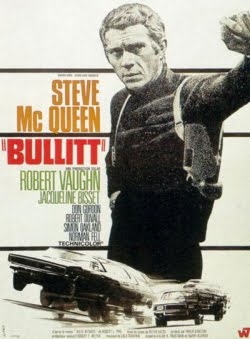
Bullitt
This movie is all about the car chase. In fact, I don't think I'm stretching the truth much to suggest Bullitt features the greatest movie car chase of all time. And don't shoot this movie down just because it's old, having been released in 1968. Quite probably the best movie Steve McQueen stared in, at least in my opinion.

Die Hard
Explosions. Explosions. Explosions. And plenty of gunfire, too. That's what this 1988 film had to offer, as well as plenty of great one-liners from star Bruce Willis. Die Hard is one of the best action movies out of the '80s, right up there with the original Lethal Weapon (which you'll see below). And the lead villain, Hans Gruber, was memorably played by Alan Rickman. Willis, playing cop John McClane, finds himself trapped inside a building that has been taken over by terrorists. What to do? Fight back.

Dirty Harry
The greatest cop movie ever made. Period. If you disagree, you are wrong. It's that simple. This 1971 flick features Clint Eastwood in the title role, and in one of the best role's he's ever played (the Man With No Name and Josey Wales are just about as good). In this movie, Harry hunts down the notorious Gemini serial killer. The scene on the football field is alone enough to make this the best cop movie ever, let alone the many other excellent scenes in this film.

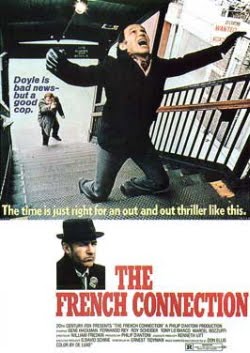
The French Connection
1971 was a great year for cop movies because both Dirty Harry and The French Connection came out that year. This one stars Gene Hackman as Detective Popeye Doyle who becomes involved in a case involving heroin smuggling from France to New York City. This is another movie that has a fantastic car chase scene, though I personally think the chase in Bullitt is better (though just barely).

Lethal Weapon
Buddy cop movies. You got to love them. And this is the finest. Part action, part comedy, 1987's Lethal Weapon lead the way for many, many buddy cop movies that came later. Mel Gibson and Danny Glover star as a couple of detectives who become embroiled with a private ops team that's smuggling drugs from Southeast Asia into America. A truly funny movie, and it also includes some of the best action sequences ever filmed.

The Maltese Falcon
Arguably, this 1941 movie isn't a cop movie. Humphrey Bogart's Sam Spade character is a private investigator, after all. But it's close enough you couldn't tell the difference. The basic plot has Spade coping with a trio of crooks who are trying to get their hands on the Maltese Falcon, a small statue worth tons and tons of money. This one might be more noir or thriller than a true action flick, but you've still got to see it for no other reason than it was a huge influence on later detective movies.

Reservoir Dogs
Not a cop movie, you might think? I beg to differ. One of the main characters, Tim Roth's Mr. Orange, is an undercover police officer. And this 1992 film is definitely a crime movie. The plot has Roth going undercover to catch a crime boss who has set up a diamond heist. Part of the genius of this movie is that the viewer doesn't know at first that Mr. Orange is actually a cop; you just think he's another crook at first. But there's plenty more moments and ideas of genius in this Quentin Tarantino debut.

Seven
Almost more of a horror movie, 1995's Seven is still technically a cop movie. Brad Pitt and Morgan Freeman are big city detectives trying to catch a serial killer who uses the Seven Deadly Sins as tokens in his slayings. One of the darkest movies of the 1990s, and it has one of the strongest endings ever to anything on film from a major studio.

Training Day
A good cop, bad cop movie. It's Ethan Hawke's first day as a detective, and he's under the wing of Denzel Washington. Unfortunately for Hawke, Washington's character turns out to be a cop so crooked he's leading a gang of crooked cops. And that's just the tip of the iceberg. A strong film, with some good action sequences, though mostly this isn't a movie with a bunch of big explosions. Came out in 2001.

The Untouchables
Who could forget Sean Connery as Irish-American cop Jim Malone. And Kevin Costner does a decent job as lawman Elliot Ness chasing down Al Capone, here played by Robert DeNiro in this 1987 movie. Not quite a true gangster movie, but close. There's plenty of old-fashioned shoot-em-up moments to be found here.